Ukiyo-e Tattoo Ideas
Ukiyo-e Tattoo Guide

Ukiyo-e Tattoo Ideas

Plan an ukiyo-e tattoo with the woodblock print's own grammar: keyblock outlines, flat color planes, and compositions cropped like a page from Hokusai's sketchbooks.

The floating world, printed on skin

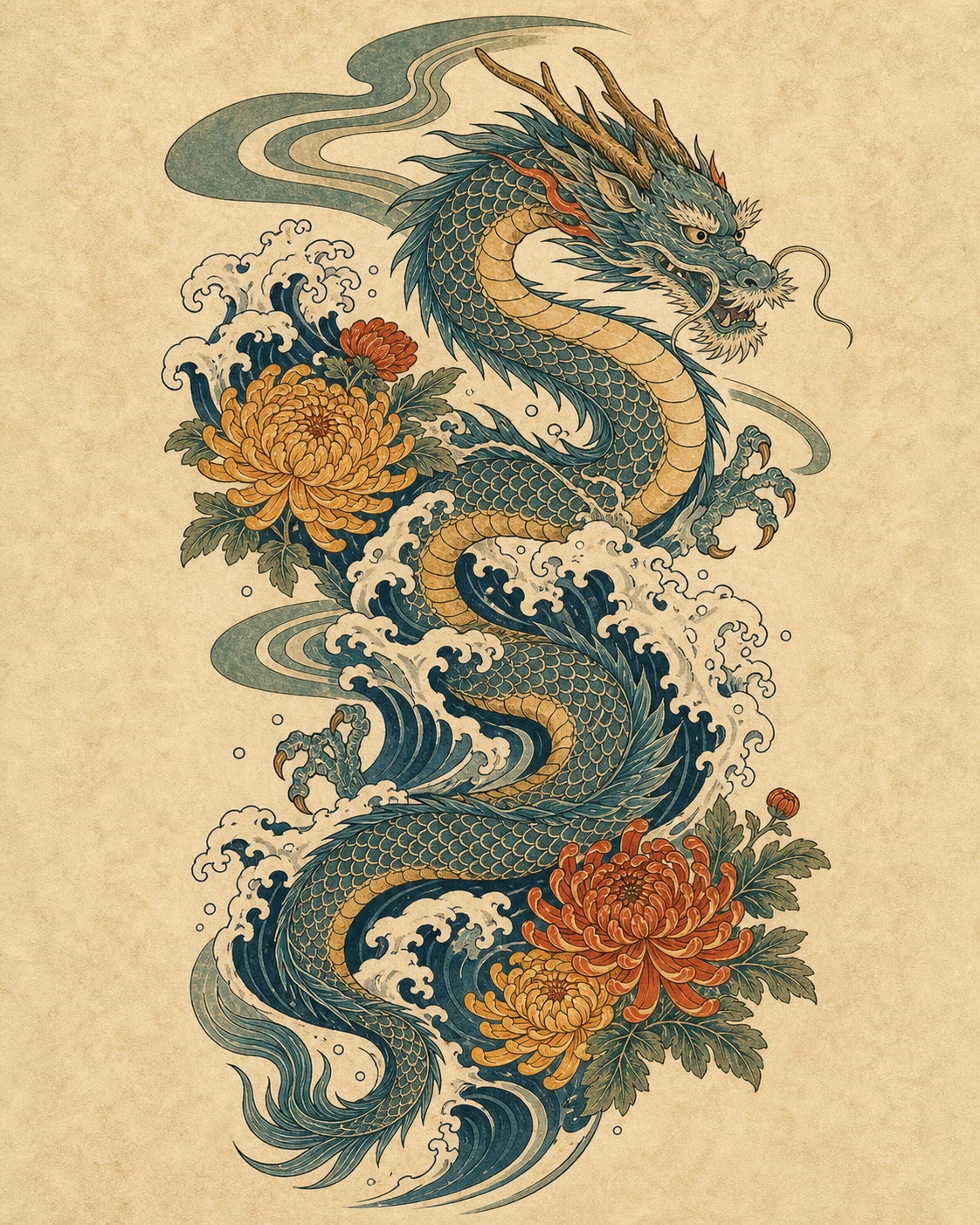
Ukiyo-e style borrows from the Japanese woodblock masters: Hokusai's waves, Hiroshige's roads, Kuniyoshi's warriors and ghosts. Unlike irezumi, which grew as a tattoo tradition, this is a print aesthetic worn on skin: flat registered colors, a dark keyblock line, and the cropping instincts of Edo publishing.

Print grammar: one dark keyblock outline, flat color planes, no photographic gradients
Motif fit: great waves, Mount Fuji views, bijin portraits, kabuki actors, yokai and ghosts
Crop like Edo: bold off-center framing and cut edges are period-correct, and they flatter limbs
Cousin, not twin: ukiyo-e is the print aesthetic; irezumi is the tattoo tradition it once fed
Waves and water Ukiyo-e
Starter Promptukiyo-e tattoo style, Japanese woodblock aesthetics, flat color planes, flowing outlines

Use this as a base, then add motif, placement, palette, and background details.

Ukiyo-e Motif Direction

Four rooms of the floating world

The ukiyo-e archive sorts naturally into waves and water, landscape views, figures of the pleasure quarters and stage, and the monstrous night parade. Each room has its own composition habits worth keeping.

Waves and water Ukiyo-e
01

Waves and water

waveHokusaiwater

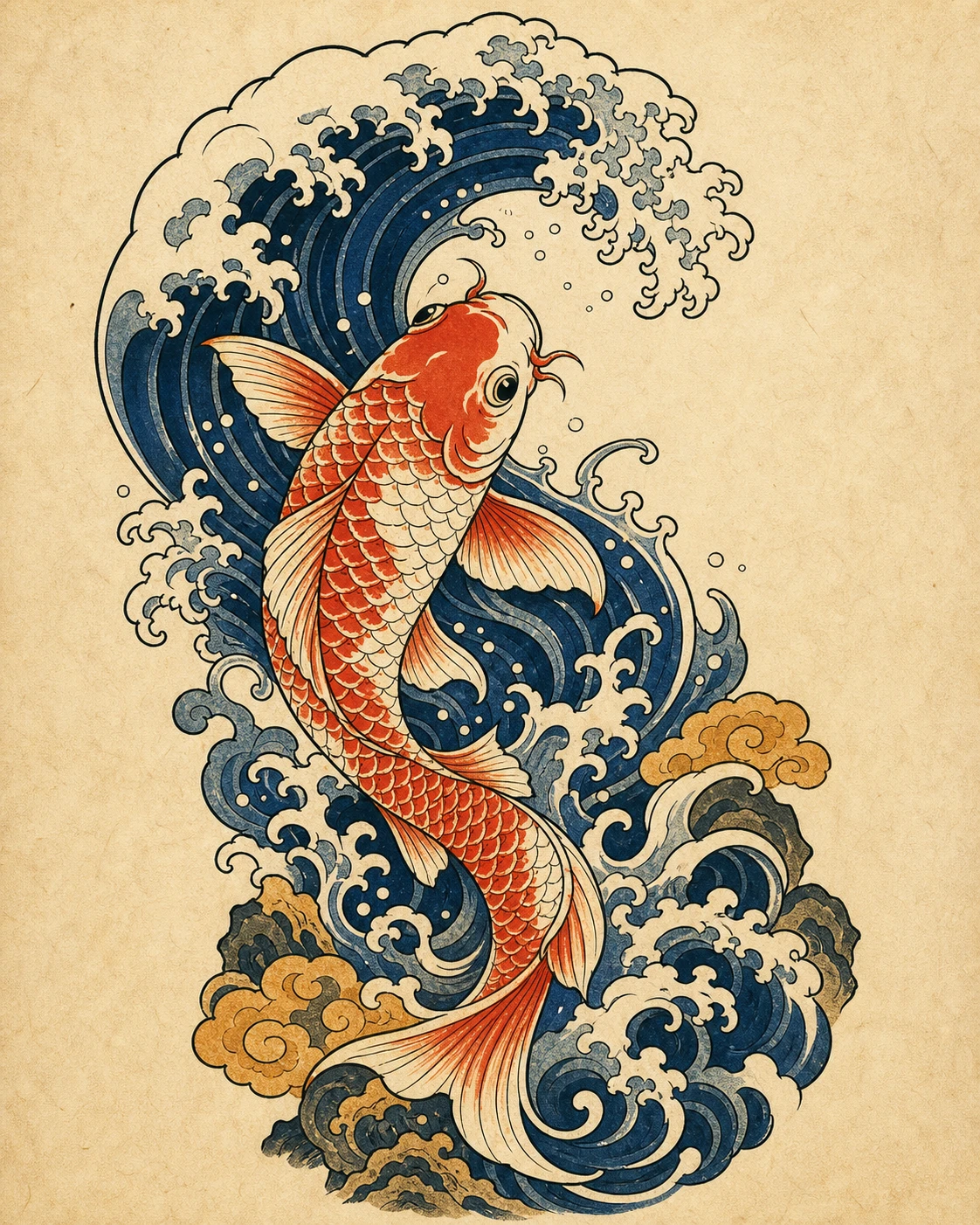
The claw-crested wave is the most reproduced image in art history, and it still works.

Hokusai's wave grammar — foam like claws, registered blues, a horizon that tilts — translates to skin with almost no loss. The trick is respecting the flatness: the wave is a shape, and shading it realistically kills the print.

Best fit

Best for forearm wraps, calves, and shoulder caps, where the curl can follow the muscle.

Design note

Two or three registered blues plus the keyblock line. Add a tiny Fuji or a boat for scale and the piece gains a story.
Landscape views Ukiyo-e
02

Landscape views

FujiHiroshigelandscape

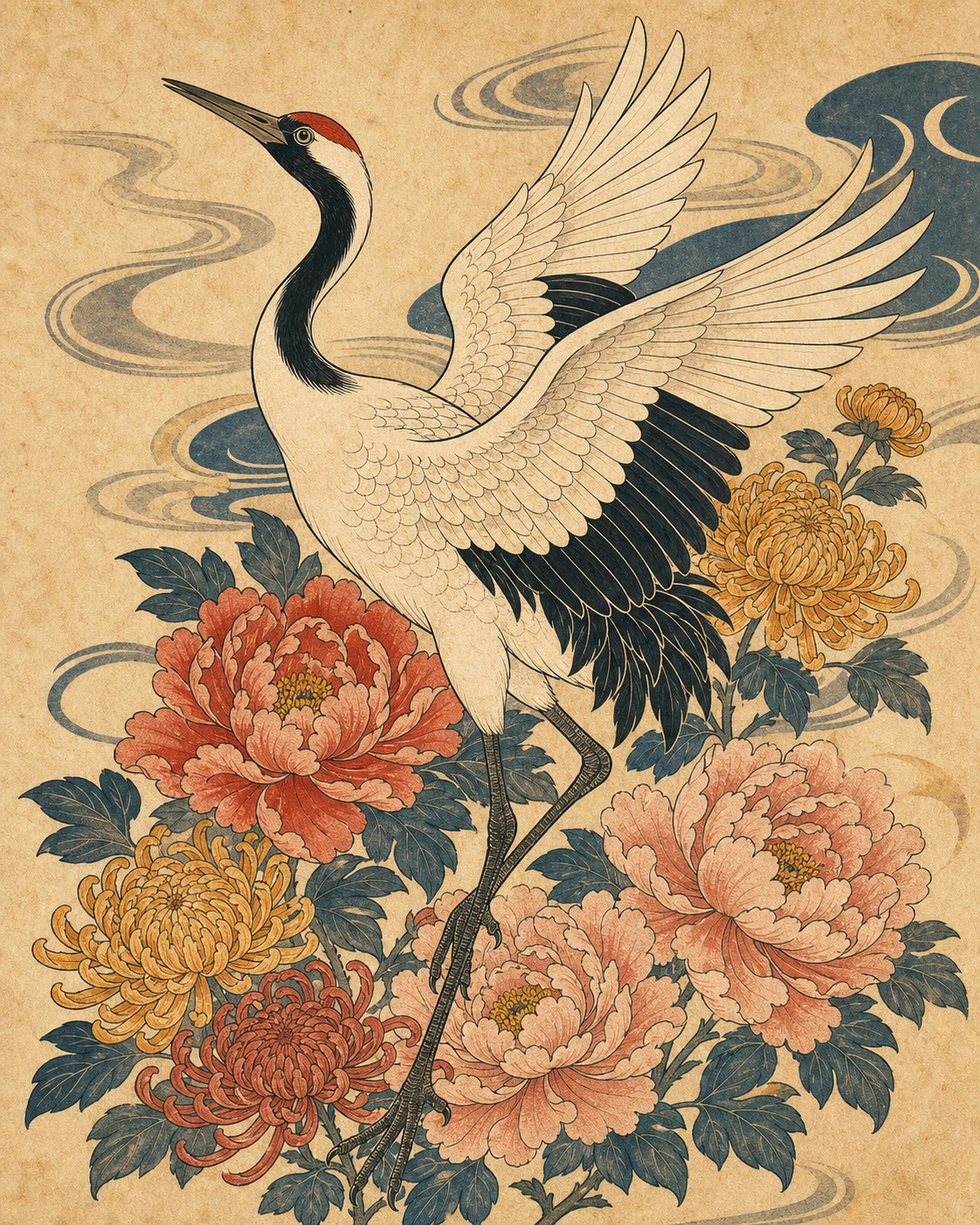
Stations, bridges, rain, and the mountain: travel prints as wearable postcards.

Hiroshige's road views compress a whole journey into one frame: a bridge in slanting rain, a village under snow, Fuji behind everything. On skin, these read as quiet, literate pieces that reward a second look.

Best fit

Best for upper arm panels and calf verticals, where a framed view sits like a hanging scroll.

Design note

Keep the rain lines, snow dots, or mist bands: the weather effects are the style's signature texture. A cartouche-style title box makes the print reference explicit.

Bijin and actor portraits Ukiyo-e
03

Bijin and actor portraits

bijinkabukiportrait

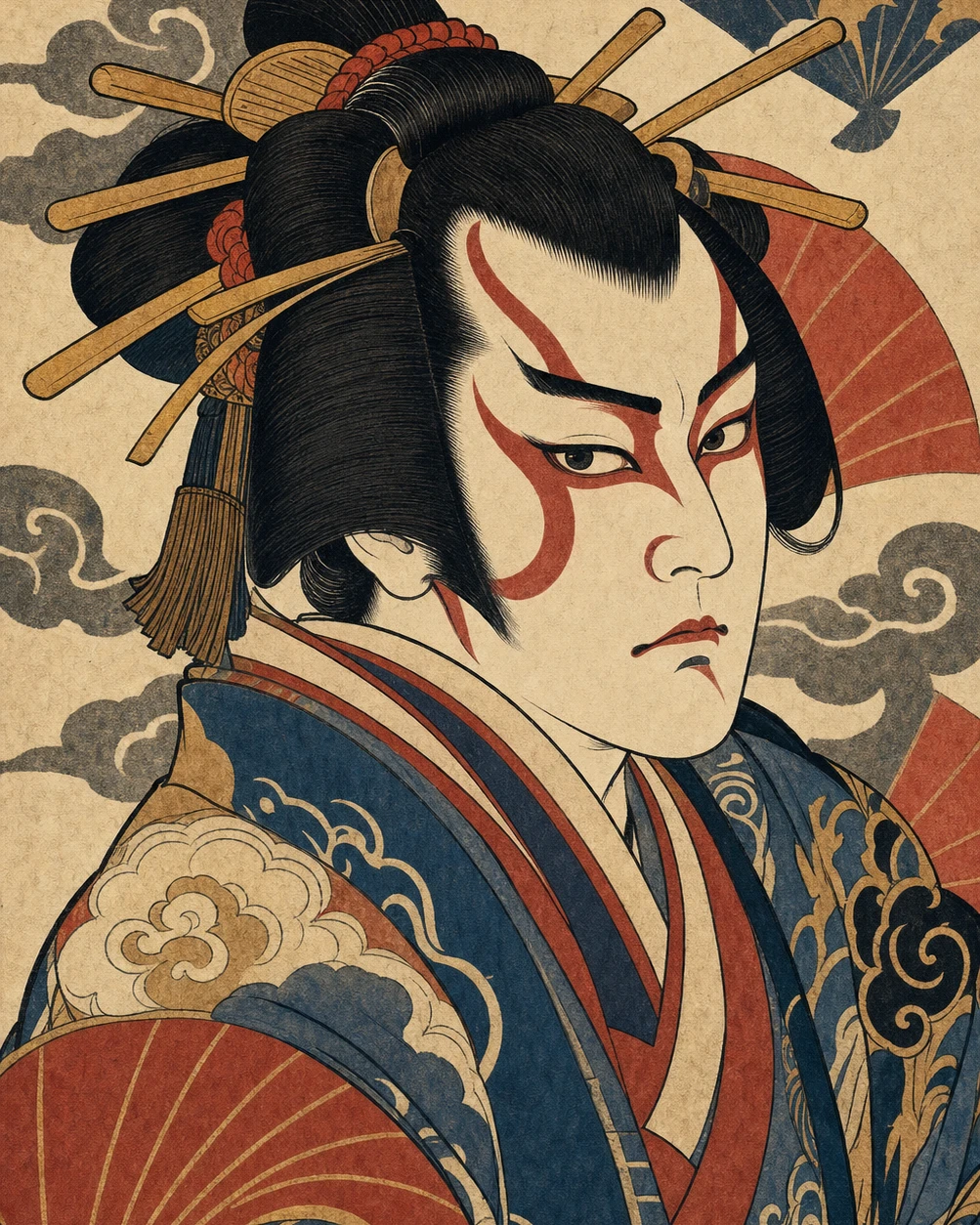
Beauties and kabuki actors: the celebrity posters of Edo, with unbeatable line economy.

Bijin-ga and actor prints draw a whole person with a few perfect lines: the sweep of a robe, a hairpin, a painted expression. That economy suits tattooing, because every line earns its place and heals clean.

Best fit

Best for thighs and upper arms, where the figure's vertical sweep has room.

Design note

Let the textile pattern carry the color and keep the face in pure line. A half-turned pose ages better than a straight-on stare.

Yokai and ghost prints Ukiyo-e
04

Yokai and ghost prints

yokaighostKuniyoshi

The night parade: skeleton spectres, cat demons, and ghosts from the kabuki stage.

Kuniyoshi and his students drew monsters with a glee that still crackles: the giant skeleton looming over warriors, ghost cats, umbrella spirits. These pieces bring humor and menace in one frame, which few tattoo genres manage.

Best fit

Best for large canvases: thigh, half back, and outer forearm for smaller single spirits.

Design note

Pick one spirit and give it stage space. The print humor lives in the pose, so keep the gesture big and the background sparse.

Test the print grammar before the studio consult

01

"Compare wave, landscape, figure, and yokai directions to find your page of the floating world."

02

"Generate flat-color and shaded versions of the same design to see why the flatness is the style."

03

"Build a brief naming the keyblock weight, the registered palette, and the crop edges."

Styles

Ukiyo-e tattoo planning: flatness, registration, and respect

The style lives or dies on flatness. Woodblock prints built their depth from overlapping planes and line, never from gradients, so an ukiyo-e tattoo that gets softly shaded turns into a generic Japanese illustration. Brief the artist on flat fills, and accept that the limited palette is the point.

Ukiyo-e and irezumi are relatives with different passports. The prints fed the tattoo tradition — Kuniyoshi's warrior prints practically launched it — but irezumi developed its own rules of background, flow, and body coverage. Wearing a print-style piece is quoting the bookshelf rather than the tattoo lineage, and knowing the difference makes the conversation with your artist sharper.

Popular ukiyo-e directions

01

Great wave piece

Claw-crested foam, two registered blues, and an optional tiny Fuji for scale.

02

Hiroshige road view

A bridge in rain or village in snow, framed like a hanging print with a title cartouche.

03

Bijin or actor portrait

A figure drawn in line economy, textile pattern carrying the color.

04

Yokai night parade

One spirit with stage space: skeleton spectre, ghost cat, or umbrella demon.

Ukiyo-e tattoo FAQ

Irezumi is the Japanese tattoo tradition, with its own background systems and body-suit logic. Ukiyo-e style quotes the woodblock prints directly: flat planes, keyblock line, print cropping. They share ancestors and motifs but read differently on skin.
Flat, saturated fills bounded by a dark line are one of the most durable constructions in tattooing, which the American traditional style proves from the other side of the world. The keyblock line does the same fencing work here.
The prints were popular mass media, made to be sold and enjoyed, and their imagery travels well. Care applies where it always applies: religious figures deserve thought, and an artist who knows the source material will keep the reference honest.
Name the print grammar and the room of the archive. A useful prompt might ask for an ukiyo-e woodblock wave for the forearm, dark keyblock outline, two flat registered blues, claw-crested foam, tilted horizon, no gradients, cropped print edge.

Start with a draft that keeps the woodblock flat

The designs on this page all came out of our AI tattoo generator. Describe your idea, pick the Ukiyo-e style, and a first draft lands in about a minute. Free to start.