Sumi-e Ink Wash Tattoo Ideas
Sumi-e Tattoo Guide

Sumi-e Ink Wash Tattoo Ideas

Plan a sumi-e tattoo the way the brush demands: one confident stroke, five shades of a single ink, and enough empty skin that the silence does half the painting.

One brush, one breath, one chance

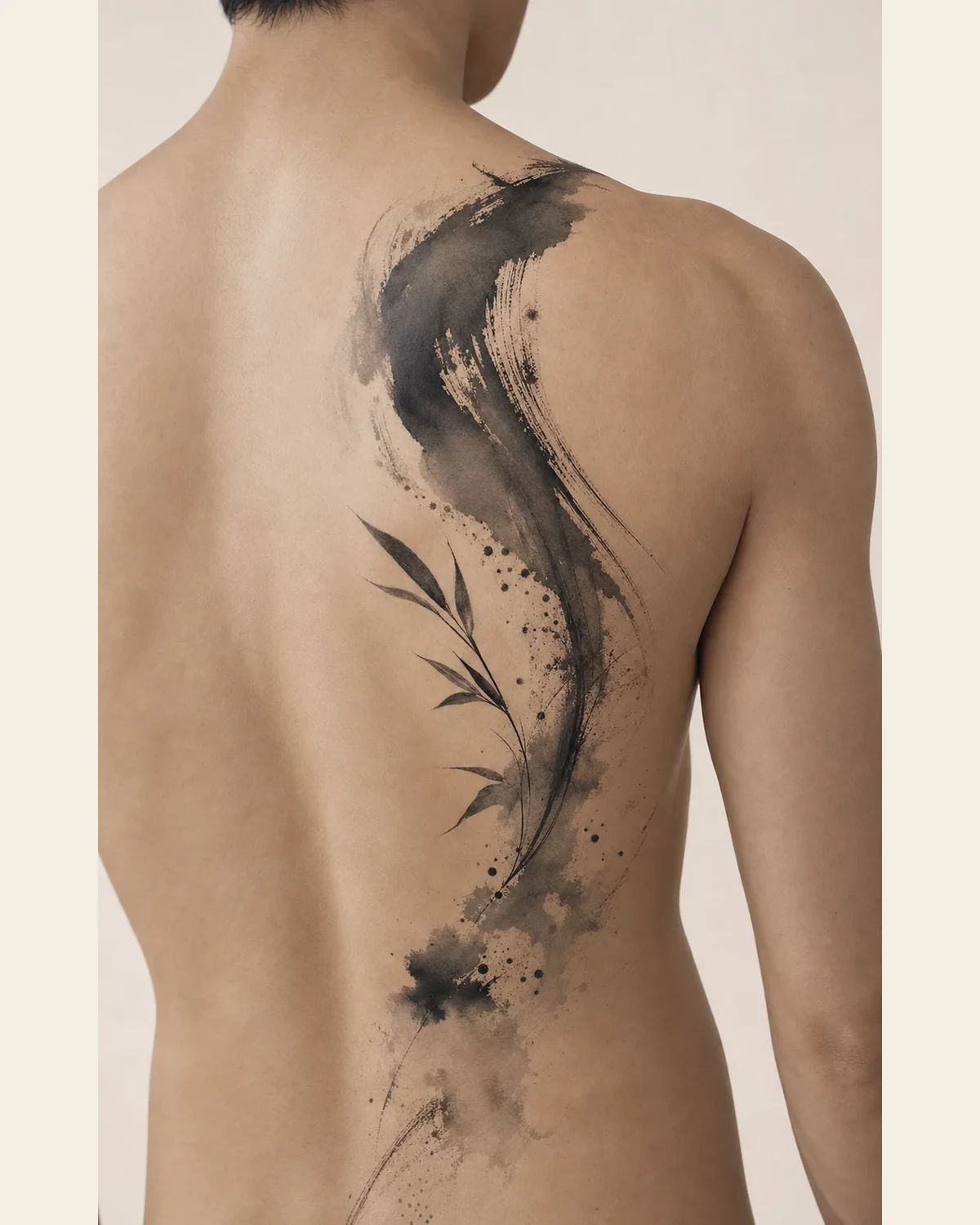
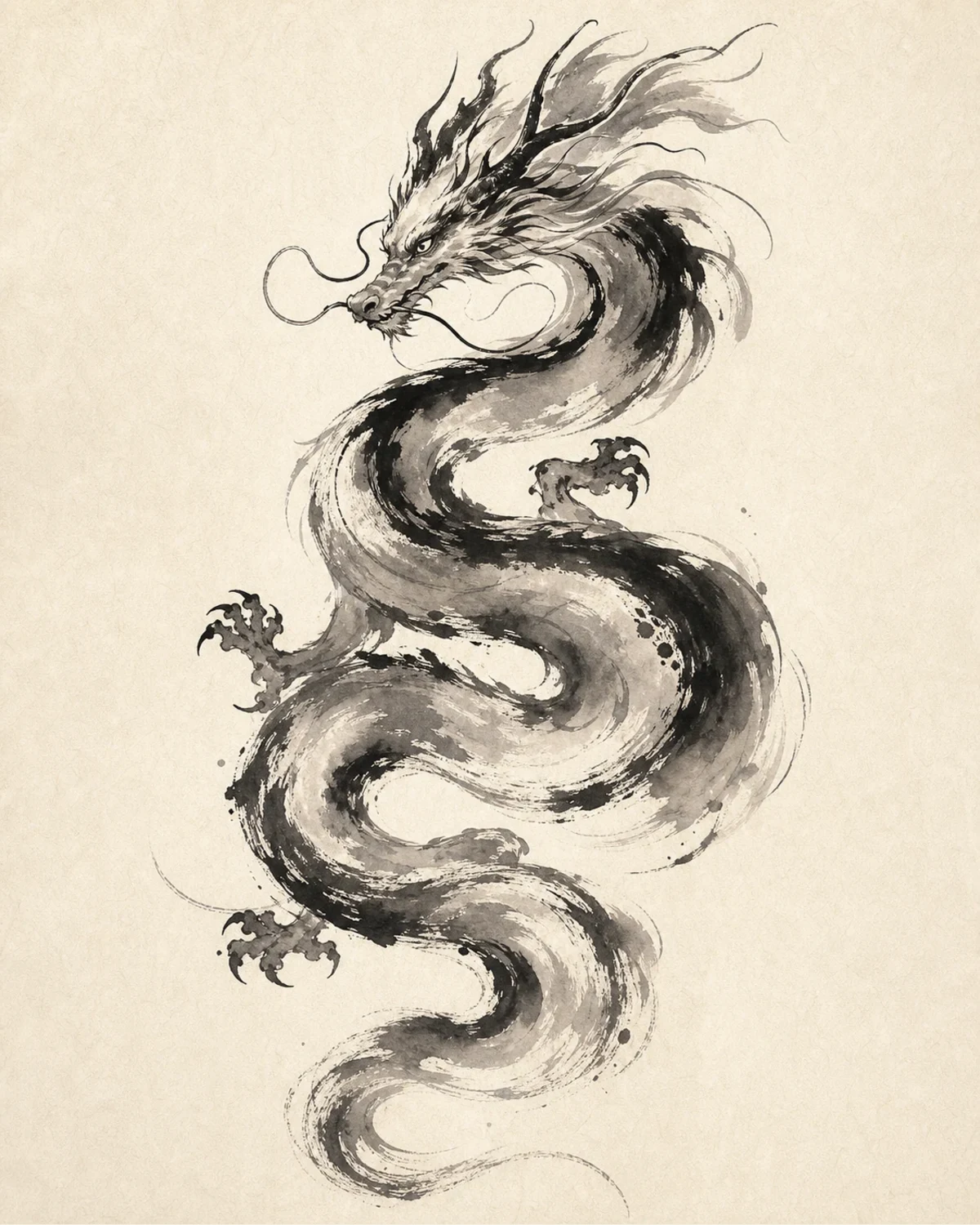
Sumi-e is the East Asian art of ink wash painting, where a subject appears in a handful of strokes and the empty paper carries as much meaning as the ink. On skin, the style trades detail for breath: soft gradients of one black, dry-brush texture, and negative space that is part of the composition rather than leftover room.

Stroke economy: the subject lives in a few committed brush movements, never in outlines
Motif fit: enso circles, bamboo and pine, ink-wash animals, mountain mist landscapes
Five shades of black: one ink diluted into a full tonal range does all the color work
Silence as material: the untouched skin is composed, and it belongs to the painting
Enso and Zen strokes Ink Wash
Starter Promptsumi-e ink wash tattoo style, expressive brushwork, tonal ink gradients, minimalist eastern painting

Use this as a base, then add motif, placement, palette, and background details.

Sumi-e Motif Direction

Subjects that survive being said in one breath

Ink wash painting favors subjects the brush already knows: things that can be stated in a gesture and finished before doubt arrives. The classic repertoire exists because it works, on paper and on skin alike.

Enso and Zen strokes Ink Wash
01

Enso and Zen strokes

ensocirclezen

The one-breath circle: a whole philosophy in a single imperfect ring.

The enso is drawn in one uninterrupted stroke, and its gaps and wobbles are the point: a record of one moment, unedited. As a tattoo it reads minimal from a distance and deeply personal up close, because no two rings land the same.

Best fit

Best for forearm, chest, and behind the shoulder, where the circle can sit undisturbed.

Design note

Keep the stroke's dry edges and let the ring stay open where the brush lifted. A mathematically perfect circle would erase everything the enso means.
Bamboo, pine, and plum Ink Wash
02

Bamboo, pine, and plum

bamboopineplum

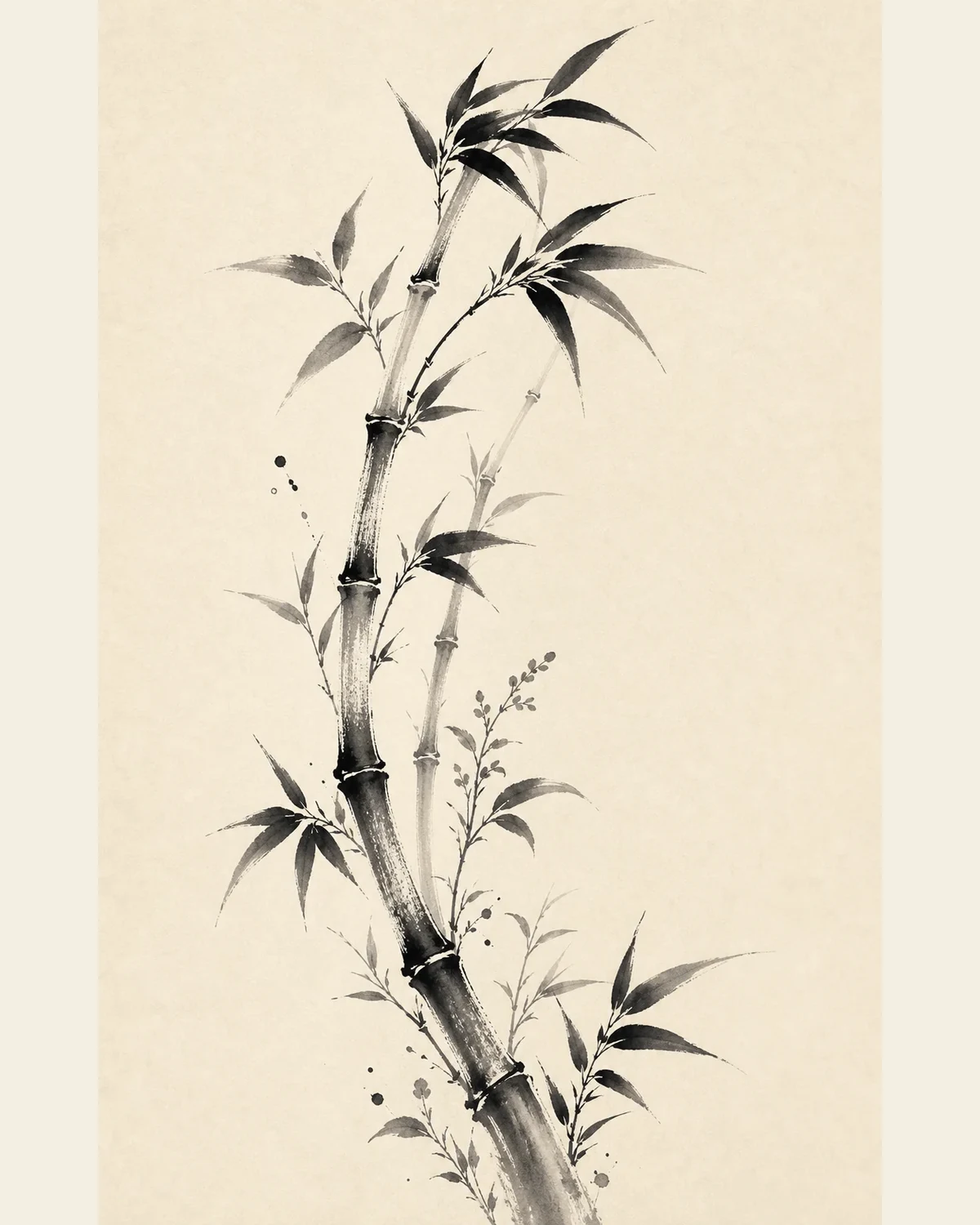
The Three Friends of Winter: the ink painter's oldest and most durable vocabulary.

Bamboo bends without breaking, pine stays green through the cold, plum blossoms in the snow. Centuries of ink painters built their practice on these three because each is a character study in strokes: the bamboo's joints, the pine's needles, the plum's angular branch.

Best fit

Best for vertical placements: inner forearm, shin, and the line beside the spine.

Design note

One species per piece. The stroke vocabulary of each plant is distinct, and mixing them muddies the calligraphy that makes the piece breathe.

Ink-wash animals Ink Wash
03

Ink-wash animals

koicranehorse

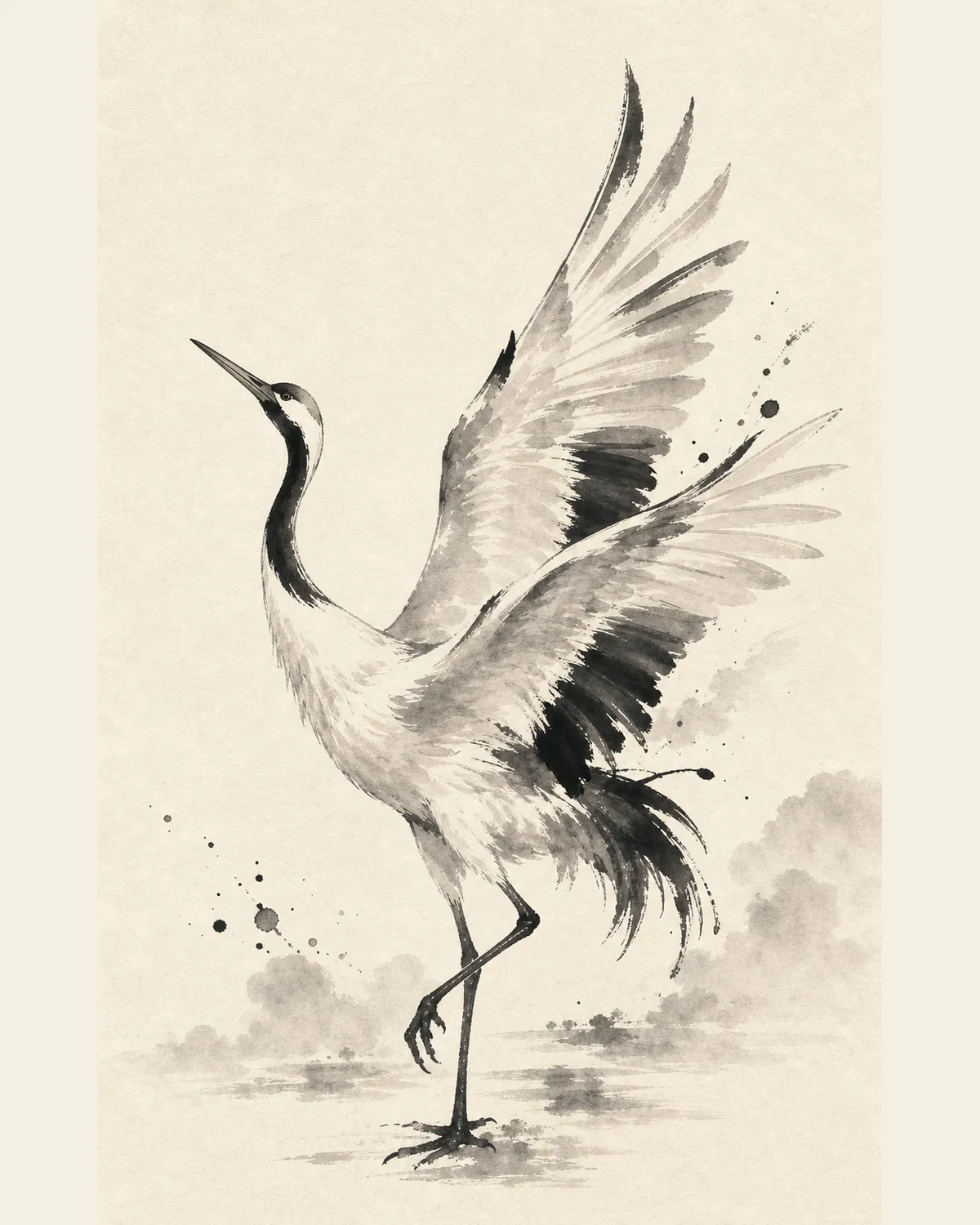
A koi in three strokes, a crane in five: animals as gestures rather than portraits.

Sumi-e animals are motion studies: the arc of a koi's turn, a crane's neck, a horse mid-gallop rendered as flying ink. The abstraction is the charm, and it ages gracefully because there is no photographic likeness to lose.

Best fit

Best for shoulder blade, ribs, and calf, where the gesture can follow the body's curve.

Design note

Ask for real dry-brush texture in the tail or mane: those broken flying-white strokes are the style's signature and they keep the piece alive.

Mountain and mist landscapes Ink Wash
04

Mountain and mist landscapes

mountainmistlandscape

Peaks dissolving into fog: the shan shui tradition compressed into a wearable scroll.

Ink landscapes stack tone instead of detail: a dark near ridge, a paler far one, and mist doing the work between them. On skin this becomes a quiet band of atmosphere that reads as art before it reads as any specific place.

Best fit

Best for inner arm bands, outer calf, and the long line of the forearm.

Design note

Let the mist be actual skin. The temptation to fill the fog with gray wash is exactly how these pieces lose their air.

Test the breath before the studio consult

01

"Compare enso, botanical, animal, and landscape directions to find what one breath can say for you."

02

"Generate denser and emptier versions of the same idea and watch how much the silence contributes."

03

"Build a brief naming the stroke count, the tonal range, and the skin that stays untouched."

Styles

Sumi-e tattoo planning: tone, texture, and the courage to stop

The craft translation is the hard part. On paper, ink wash lives on absorbency and water; on skin, the artist rebuilds those soft edges and dry-brush breaks with needle control. Look for healed ink-wash work in a portfolio, specifically the fades: a soft edge that healed patchy tells you the translation failed.

Restraint is the other half. Every element added to a sumi-e piece costs more than it pays, because the style's power is the feeling that nothing could be removed. A good brief says what the piece is, what tone range it uses, and then, hardest of all, says nothing more.

Popular sumi-e directions

01

Enso circle tattoo

One unedited breath: an open ring with dry edges, imperfect on purpose.

02

Three Friends of Winter

Bamboo, pine, or plum in classic stroke vocabulary, one species per piece.

03

Ink-wash animal gesture

A koi, crane, or horse stated in a few strokes with flying-white texture.

04

Mist and mountain band

Stacked tonal ridges with the fog left as untouched skin.

Sumi-e tattoo FAQ

Soft gradients age the same way everywhere: they mellow. Sumi-e survives this better than most soft styles because its structure lives in the dark committed strokes, and the washes only carry atmosphere. Keep the darks honest and the piece keeps reading.
They share softness and differ in discipline. Watercolor plays with color and splash; sumi-e restricts itself to one ink, calligraphic strokes, and composed emptiness. The restraint is the identity.
Calm, flowing zones: inner forearm, shoulder blade, ribs, calf. The strokes want to follow the body's long lines, and the empty space needs skin that stays visually quiet.
Name the stroke economy and the silence. A useful prompt might ask for a sumi-e ink wash koi for the shoulder blade, three confident brush strokes, dry-brush tail, tonal gradients of a single black, large untouched negative space, no outline.

Start with a draft that leaves the silence in

The designs on this page all came out of our AI tattoo generator. Describe your idea, pick the Ink Wash style, and a first draft lands in about a minute. Free to start.