Black and Grey Realism Tattoo Ideas
Black & Grey Realism Guide

Black and Grey Realism Tattoo Ideas

Plan a black and grey realism tattoo with honest contrast, smooth healed gradients, and a studio brief that protects the highlights your portrait or statue piece will live on.

What makes black and grey realism survive on skin

Black and grey realism is built on contrast management, not on detail alone. Portraits, statues, animals, and drapery all heal well when the darkest darks are planned, the highlights stay open skin, and the soft gray washes have structure underneath to lean on.

Contrast plan: deep black anchors, protected highlights, and gray washes in between
Motif fit: portraits, religious statuary, wildlife, roses, clocks, smoke, and fabric
Healed softness: gradients flatten a shade over time, so the value range starts wider than the reference
Studio clarity: reference photo quality, placement flow, and size honesty decide most of the result
Portrait realism B&G Realism
Starter Promptblack and grey realism tattoo, photorealistic shading, dramatic contrast, highly detailed texture and lighting

Use this as a base, then add motif, placement, palette, and background details.

Realism Motif Direction

Realism reads photographic only when the values are engineered

A strong black and grey piece starts from a high-quality reference and a value map: where the piece goes near-black, where it stays untouched skin, and how the grays bridge the two. Detail comes last.

Portrait realism B&G Realism
01

Portrait realism

portraitfamilymemorial

The flagship of the style, and the least forgiving. Eyes and value structure decide everything.

A black and grey portrait lives or dies on the reference photo: sharp focus, single light source, real shadows. The artist can only pack in what the photo actually shows, and the eyes need the cleanest contrast on the whole piece.

Best fit

Best for upper arm, inner forearm, chest panel, and thigh, where the surface is broad and calm.

Design note

Ask for one strong light direction and protected white-skin highlights in the eyes and nose bridge. A portrait without near-black pockets heals flat.
Religious and statuary pieces B&G Realism
02

Religious and statuary pieces

statuepraying handsangel

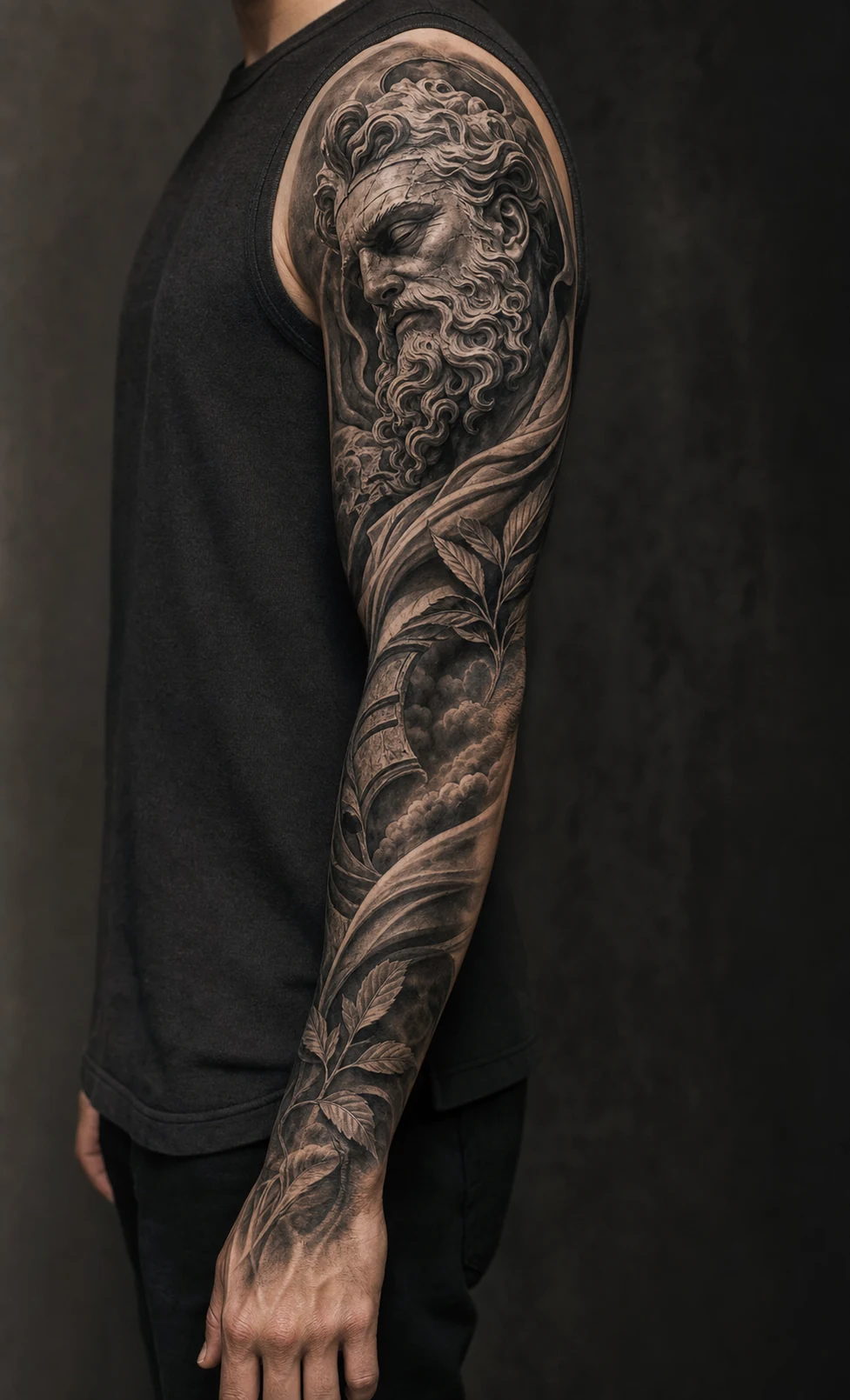
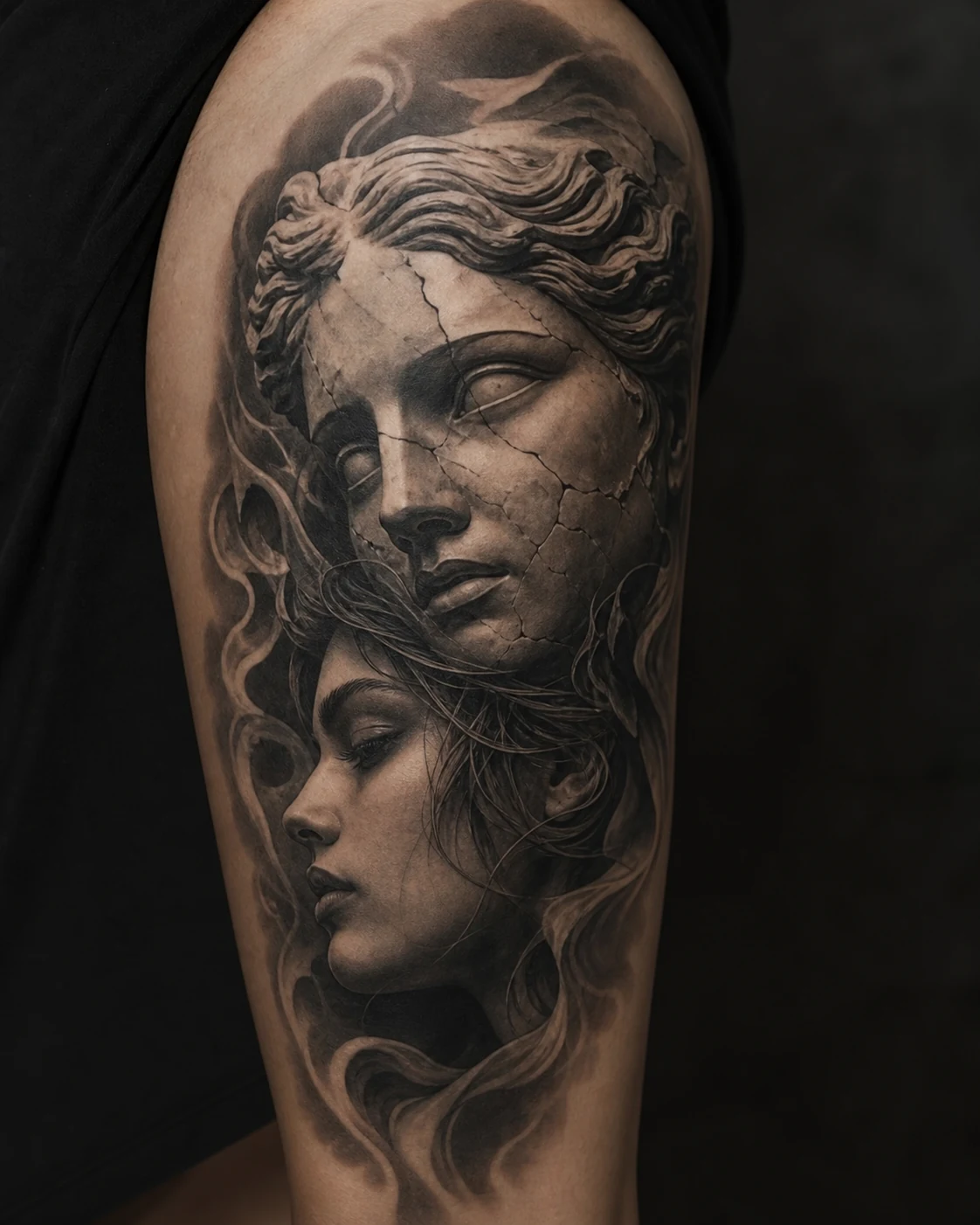
Praying hands, Madonnas, angels, and Greek marble carry realism with more forgiveness than faces.

Stone and cloth forgive small drifts that a living face never forgives. Statuary realism keeps the drama of the style with a longer lifespan, and it stacks naturally into sleeves with smoke and architecture.

Best fit

Best for full sleeves, chest-to-shoulder runs, calves, and larger forearm panels.

Design note

Treat the fabric folds as the shading playground and keep the face simpler than the drapery. Marble reads best with cool, even gradients and hard-edged cracks.

Wildlife and animal shadow B&G Realism
03

Wildlife and animal shadow

lionwolfowl

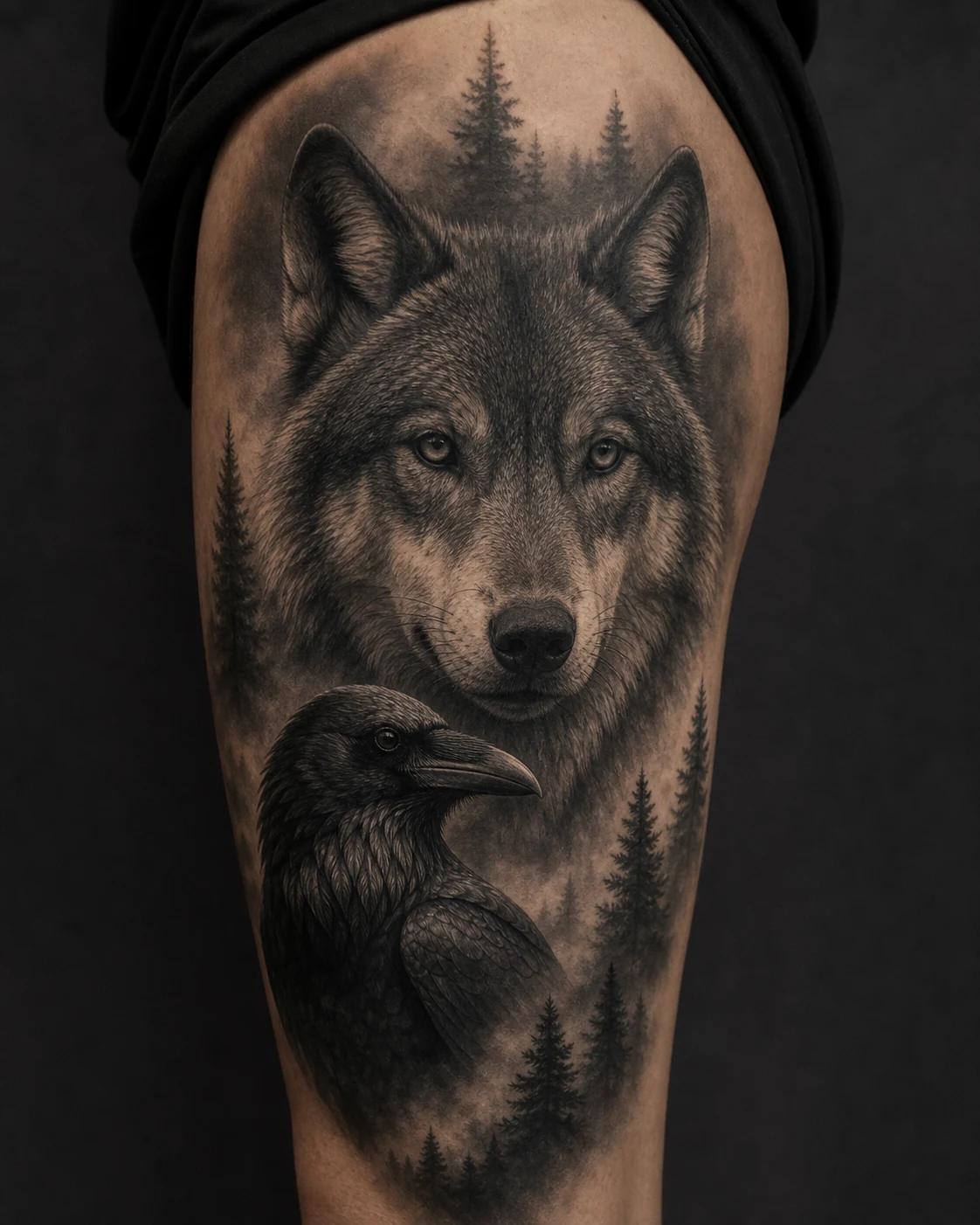
Fur and feather texture over a strong silhouette, from full portraits to half-shadow compositions.

Animal realism needs the skull structure right before any fur goes on. Half-lit compositions, where one side falls into smoke or open skin, age better than evenly detailed heads and give the piece a mood.

Best fit

Best for shoulder caps, outer forearms, thighs, and chest corners that let the animal face the body's center line.

Design note

Anchor the eyes and nose in near-black, let the coat fade toward open skin. Whiskers and single hairs are the first details to blur, so keep them sparse.

Roses, clocks, smoke, and drapery B&G Realism
04

Roses, clocks, smoke, and drapery

roseclocksmoke

The connective tissue of black and grey sleeves, and strong standalone pieces on their own.

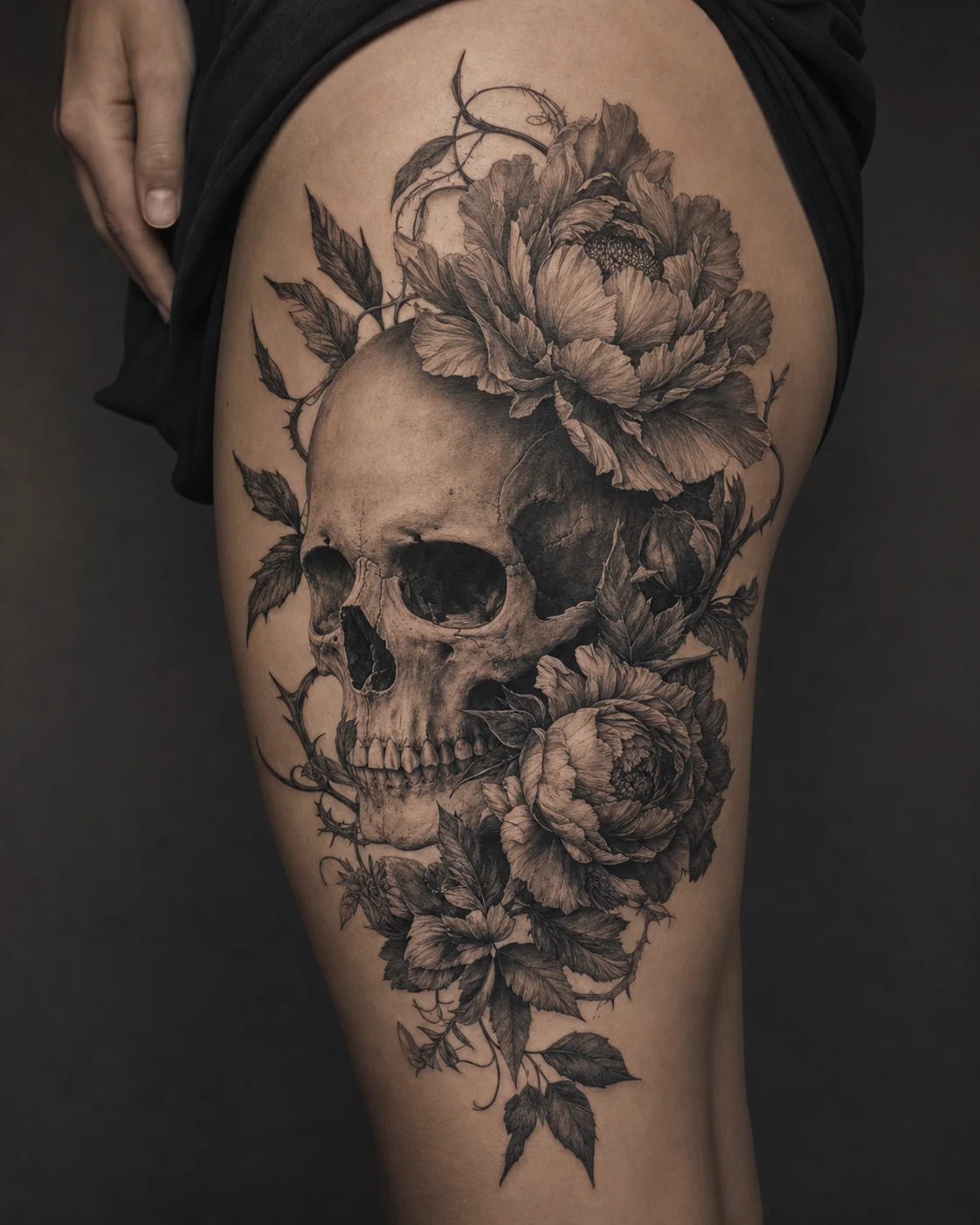
Soft gray roses, melting clocks, smoke ribbons, and fabric are how realism sleeves breathe between portraits. Each one is also a classic solo piece that heals gracefully because the shapes are organic.

Best fit

Best for gap fillers in sleeves, inner biceps, ribs, and any placement that needs flow more than a subject.

Design note

Give every rose a dark core and every smoke ribbon a direction. Random softness everywhere is the fastest route to a gray blur at year ten.

Use AI to test the value map before the studio consult

01

"Compare portrait, statuary, wildlife, and rose-and-smoke directions before choosing what carries the piece."

02

"Test high-contrast and soft-wash versions of the same design so you can see which one still reads at arm's length."

03

"Build a studio brief with reference notes, placement, size honesty, and where the highlights must stay open skin."

Styles

Black and grey realism planning for contrast, references, and healed shading

Most realism references look effortless because the photograph already solved the lighting. Skin adds healing, spread, and sun, so the tattoo version needs a wider value range than the photo: darker anchors, cleaner highlights, and gray washes that have somewhere to fade to.

A useful realism brief names the reference quality, the placement, the target size, and the two or three zones where contrast matters most. That lets the artist tell you honestly what survives at that scale and what should be simplified before the needle starts.

Popular black and grey realism directions

01

Black and grey portrait tattoo

Family portraits and memorial pieces built from one sharp, single-light reference photo with real shadows.

02

Religious statue tattoo

Praying hands, angels, and marble figures that keep realism's drama with more healed forgiveness than faces.

03

Wildlife realism tattoo

Lions, wolves, and owls with near-black eye anchors and coats that fade into smoke or open skin.

04

Rose, clock, and smoke pieces

The classic connective motifs that fill sleeves, wrap placements, and still work as standalone designs.

Black and grey realism FAQ

With strong contrast planning, good placement, and sun protection, the structure holds for decades even as soft gradients mellow. Pieces built only from pale gray washes lose definition much faster.
Sharp focus, one clear light direction, real shadows, and enough resolution to see the eyes. A flat, front-lit phone photo forces the artist to invent values, and invented values are where portraits go wrong.
Black-based pigment is the most stable ink on skin, so black and grey generally outlasts color work. The trade-off is that everything depends on values: if the contrast is weak on day one, age only weakens it further.
Name the subject, placement, light direction, and contrast plan. A useful prompt might ask for a black and grey realism lion for the outer forearm, single top-left light source, near-black eye and mane anchors, soft smoke fade, open-skin highlights, no background wall.

Start with a realism draft that protects its highlights

The designs on this page all came out of our AI tattoo generator. Describe your idea, pick the B&G Realism style, and a first draft lands in about a minute. Free to start.