Fine Line Tattoo Ideas
Fine Line Tattoo Guide

Fine Line Tattoo Ideas

Plan a fine line tattoo with cleaner motif choices, placement notes, aging-aware detail, and an AI-ready brief you can refine before the studio consult.

What makes a fine line tattoo work

Fine line tattoos look light, but the best ones are very deliberate. Every stem, wing, word, star, or tiny symbol needs enough breathing room, line confidence, and placement logic so the design stays elegant after healing instead of turning into a fragile sketch.

Single-needle feel: thin black lines, open skin, and quiet detail without heavy fills
Small motifs: birth flowers, butterflies, moons, initials, dates, tiny animals, and symbols
Placement discipline: wrists, ribs, collarbones, ankles, shoulders, and forearms need different spacing
Aging clarity: fewer micro-details, cleaner gaps, and enough scale for healed readability
Botanical and birth flowers Fine Line

Starter Prompt

fine line minimalist tattoo, clean negative space, delicate single-needle details, simple elegant composition

Use this as a base, then add motif, placement, palette, and background details.

Motif And Placement Breakdown

Fine line tattoos feel effortless only when the composition is carefully restrained

A strong fine line tattoo starts with one clear idea, then removes anything that will blur, crowd, or fight the body line. Use these directions to turn a delicate reference into a tattoo brief that still has structure.

Botanical and birth flowers Fine Line
01

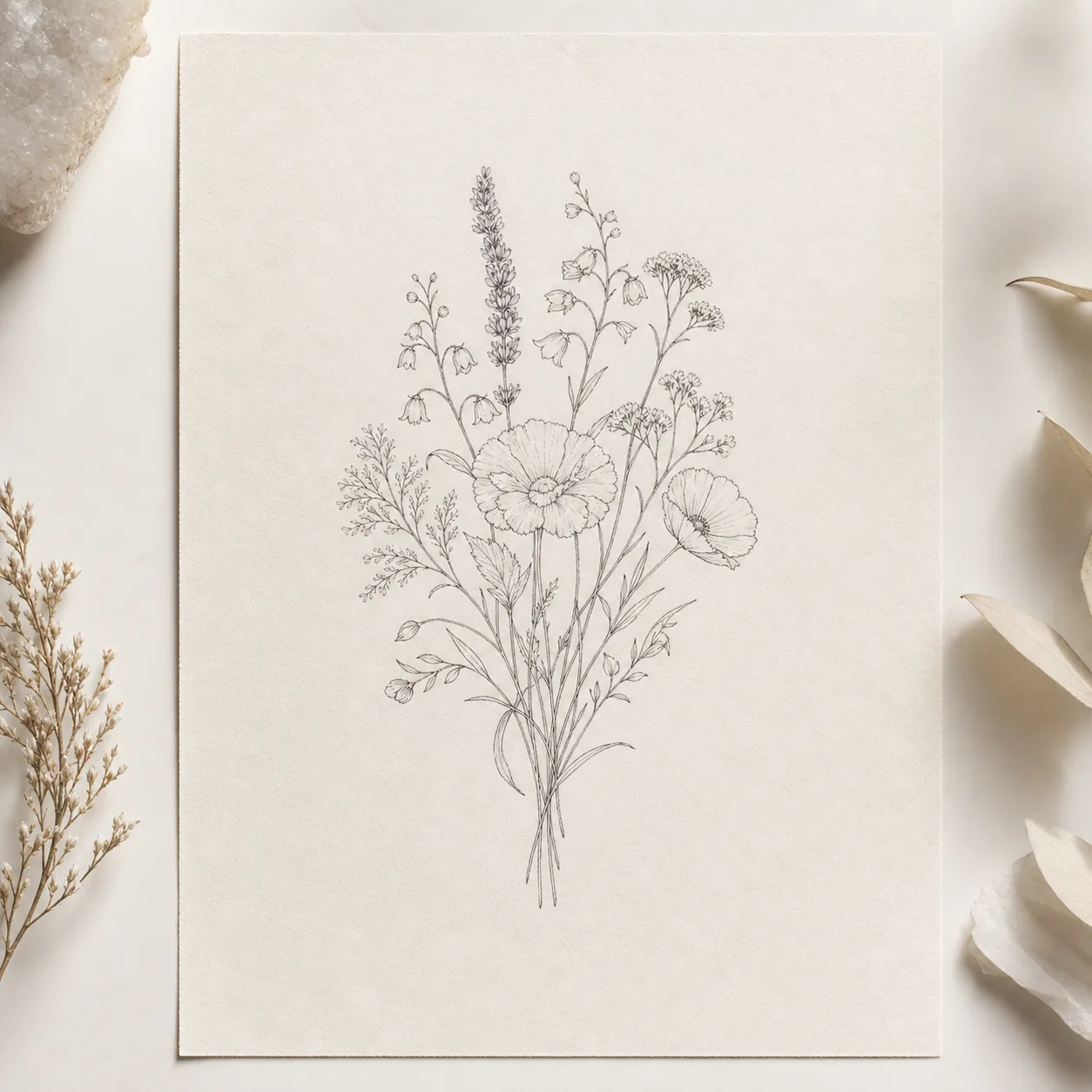
Botanical and birth flowers

floralpersonalsoft detail

The safest direction when you want a delicate tattoo that still has a clear shape.

Fine line florals work because stems, petals, and leaves can hold the drawing with very little ink. Birth flowers, wildflower sprigs, olive branches, and small bouquets can feel personal without needing dense shading.

Best fit

Best for inner forearms, ribs, collarbones, ankles, upper arms, and small shoulder placements.

Design note

Keep stems readable and avoid too many tiny leaf clusters. A little negative space between petals does more for longevity than adding another delicate detail.
Celestial and ornamental lines Fine Line
02

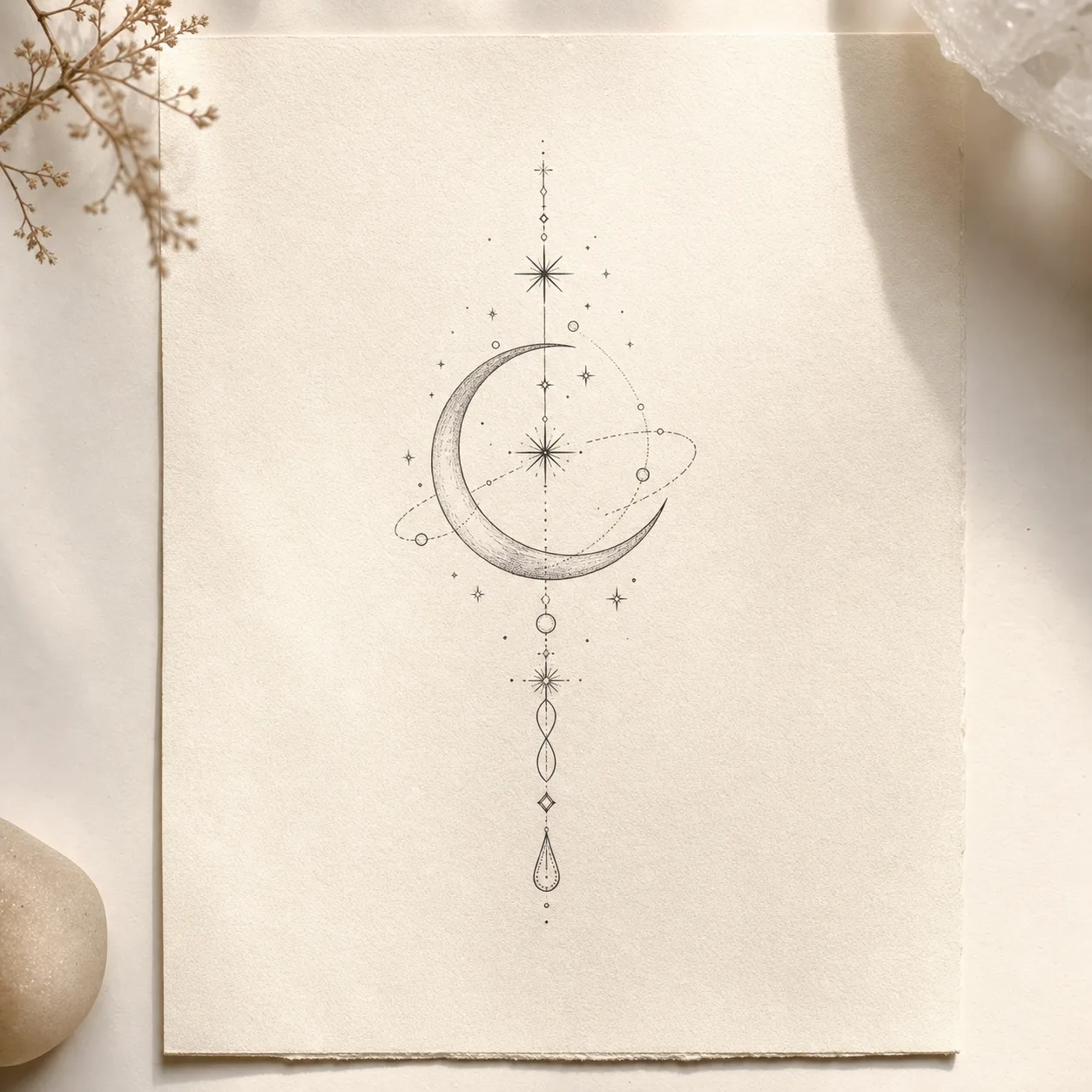
Celestial and ornamental lines

moonstarsbalance

A calm option for people who want symbolism, symmetry, and a clean vertical flow.

Crescents, tiny stars, orbit lines, dots, and jewelry-like drops can make a fine line tattoo feel composed rather than random. The shape should still be simple enough to breathe on skin.

Best fit

Best for sternum, spine-adjacent placements, collarbone, upper back, wrists, and shoulder caps.

Design note

Use fewer dots than the reference board suggests. Tiny dot chains can close up visually, so let the main moon or symbol carry the composition.

Butterflies and tiny animals Fine Line
03

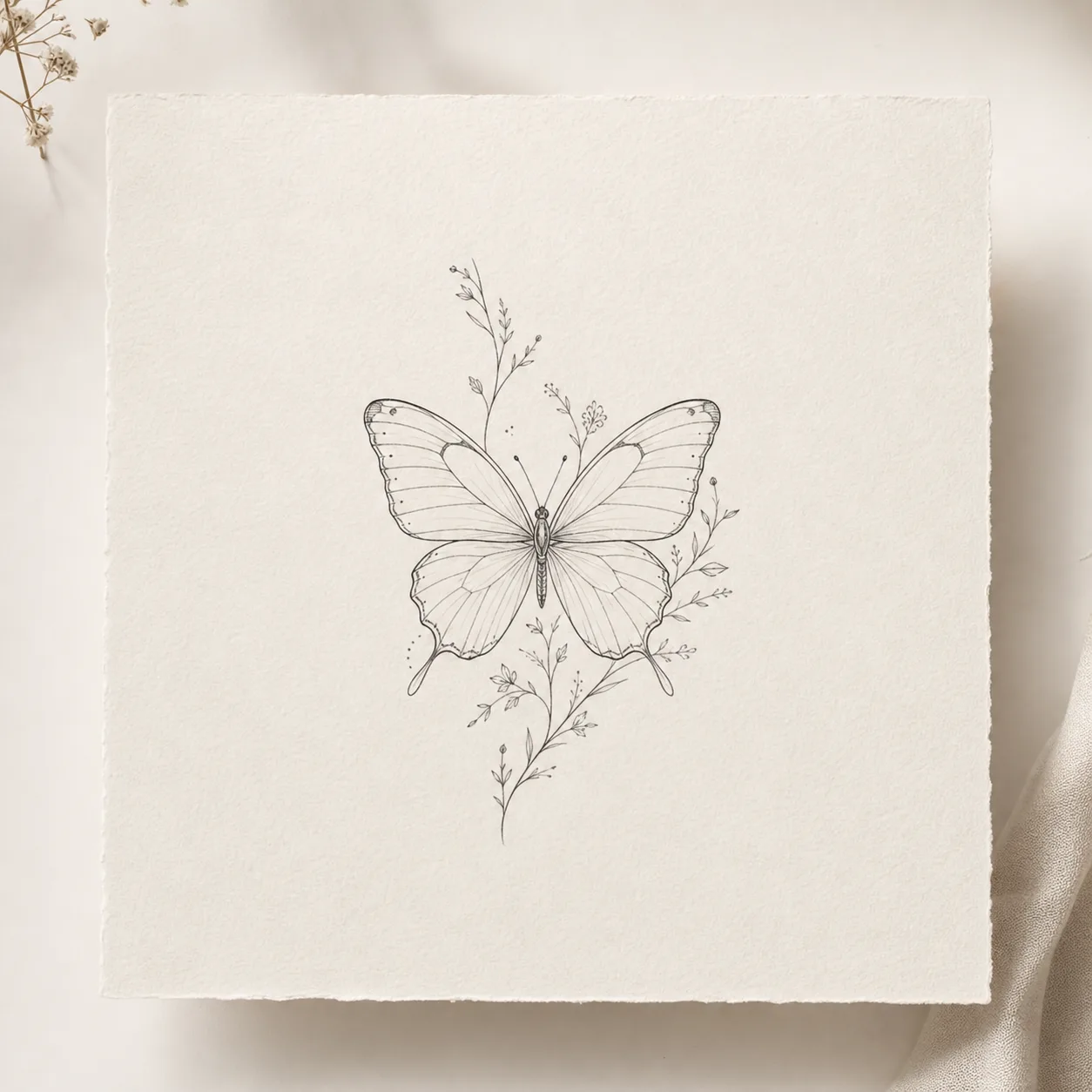
Butterflies and tiny animals

movementmemorylightness

Useful when the tattoo needs life, motion, or a gentle memorial without becoming heavy.

Butterflies, dragonflies, small birds, cats, dogs, and simple animal outlines can work beautifully in fine line. The key is choosing one clear silhouette and leaving enough open skin inside it.

Best fit

Best for outer forearms, ankles, shoulders, upper arms, calves, and small placements that need a soft focal point.

Design note

Add one supporting element, not five. A tiny flower, star, or curved motion line can help the subject feel placed without crowding the main outline.

Script, dates, and tiny symbols Fine Line
04

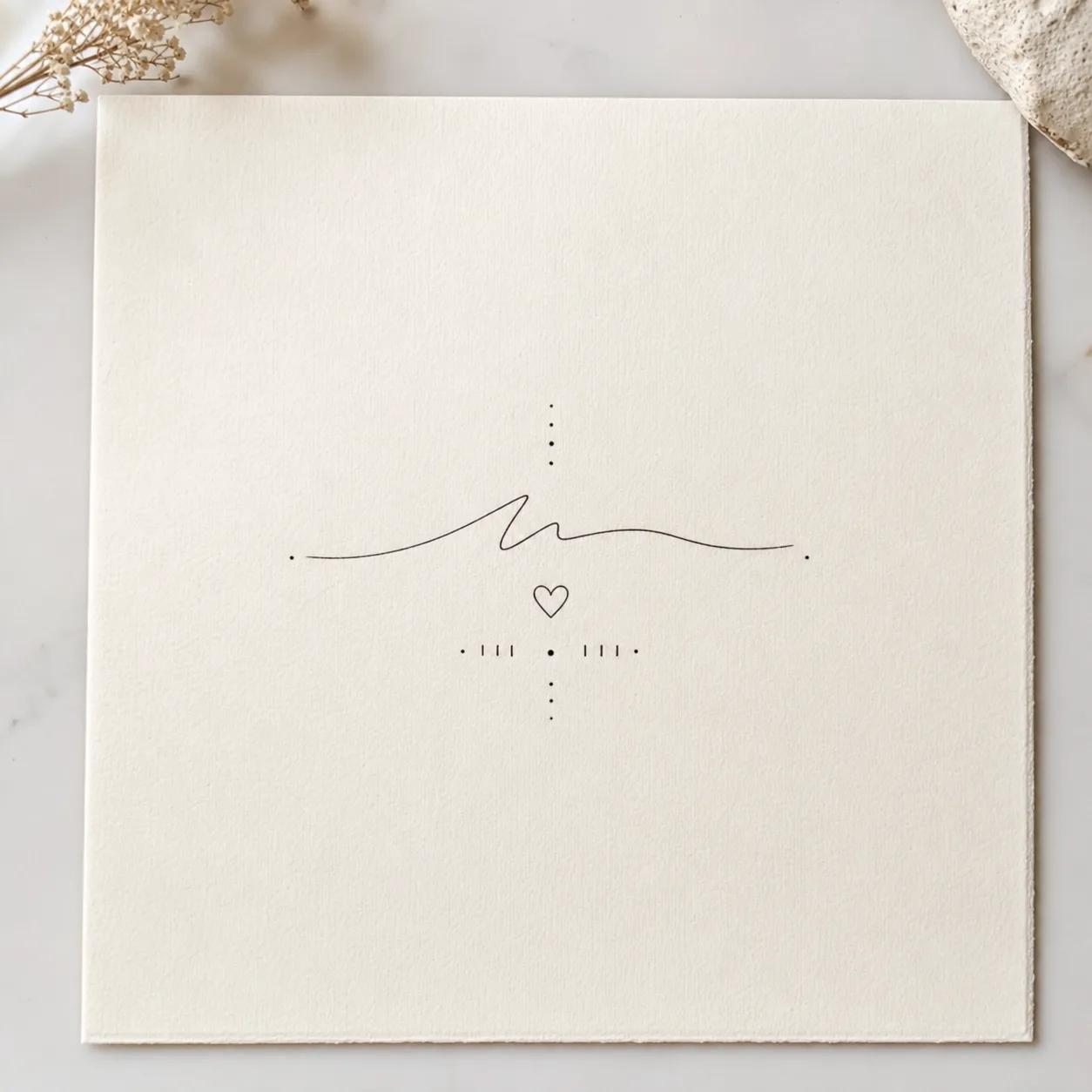
Script, dates, and tiny symbols

wordsmemoryminimal

Good for personal tattoos, but the spacing and size matter more than the phrase itself.

Fine line lettering needs room. Handwritten words, initials, coordinates, dates, and tiny hearts can age well when the letters are not squeezed together and the line weight is not too faint.

Best fit

Best for wrists, ribs, inner arms, collarbones, ankles, and placements where the text can sit flat.

Design note

Choose a short phrase or symbol system. Long sentences in tiny script often look charming on screen and become hard to read on healed skin.

Use AI to shape a fine line tattoo that can still heal cleanly

"Compare floral, celestial, animal, and script directions before deciding which delicate idea has the strongest shape."

"Test wrist, rib, collarbone, ankle, forearm, or shoulder placement so the linework follows the body instead of floating."

"Turn a tiny reference image into a clearer brief with scale, spacing, negative space, and aging notes included."

Fine line tattoo placement, scale, and aging logic

Fine line tattoo searches often begin with delicate inspiration: a small flower, a butterfly, a moon, a word, a pet outline, or a tiny symbol. The studio decision is more practical. The artist has to decide how thin the line can be, how much room the details need, and whether the design will still read after the ink settles.

Think of fine line as a spacing discipline, not only a thin-line style. The subject, body placement, skin movement, line weight, and amount of negative space decide whether the tattoo feels refined or simply underbuilt. A useful early draft should show restraint as clearly as it shows beauty.

Popular fine line tattoo directions

Fine line flower tattoo

Birth flowers, wildflowers, roses, lavender, and olive branches give delicate linework a natural structure.

Fine line butterfly or tiny animal tattoo

A clean silhouette, a little movement, and open skin inside the subject can keep a small piece readable.

Fine line moon, stars, and ornamental tattoo

Celestial shapes work well when the design needs softness, symbolism, and a centered vertical rhythm.

Fine line script and date tattoo

Short words, initials, coordinates, and dates need careful spacing so they stay legible after healing.

Fine line tattoo FAQ

They can soften faster than bolder styles because the lines are thin and often carry less pigment. Good scale, clean spacing, healed-work references, and careful aftercare make a big difference.
Inner forearms, ribs, collarbones, ankles, shoulders, upper arms, and flatter wrist areas are common because they let delicate lines sit cleanly without too much distortion.
It can be small, but it should not be cramped. If the design has letters, petals, wings, or tiny dots, the artist needs enough room between details for the tattoo to remain readable after healing.
Name the subject, placement, line weight, amount of negative space, and what to avoid. A useful prompt might specify a delicate fine line birth flower bouquet for inner forearm, single-needle look, clean open spacing, no heavy shading.

Start with a fine line draft that has enough room to breathe

Generate My Fine Line Tattoo Design
Fine Line Tattoo Ideas, Designs & AI Generator | OpenInk