AI Tattoo Design: Find a Piece That's Actually Yours
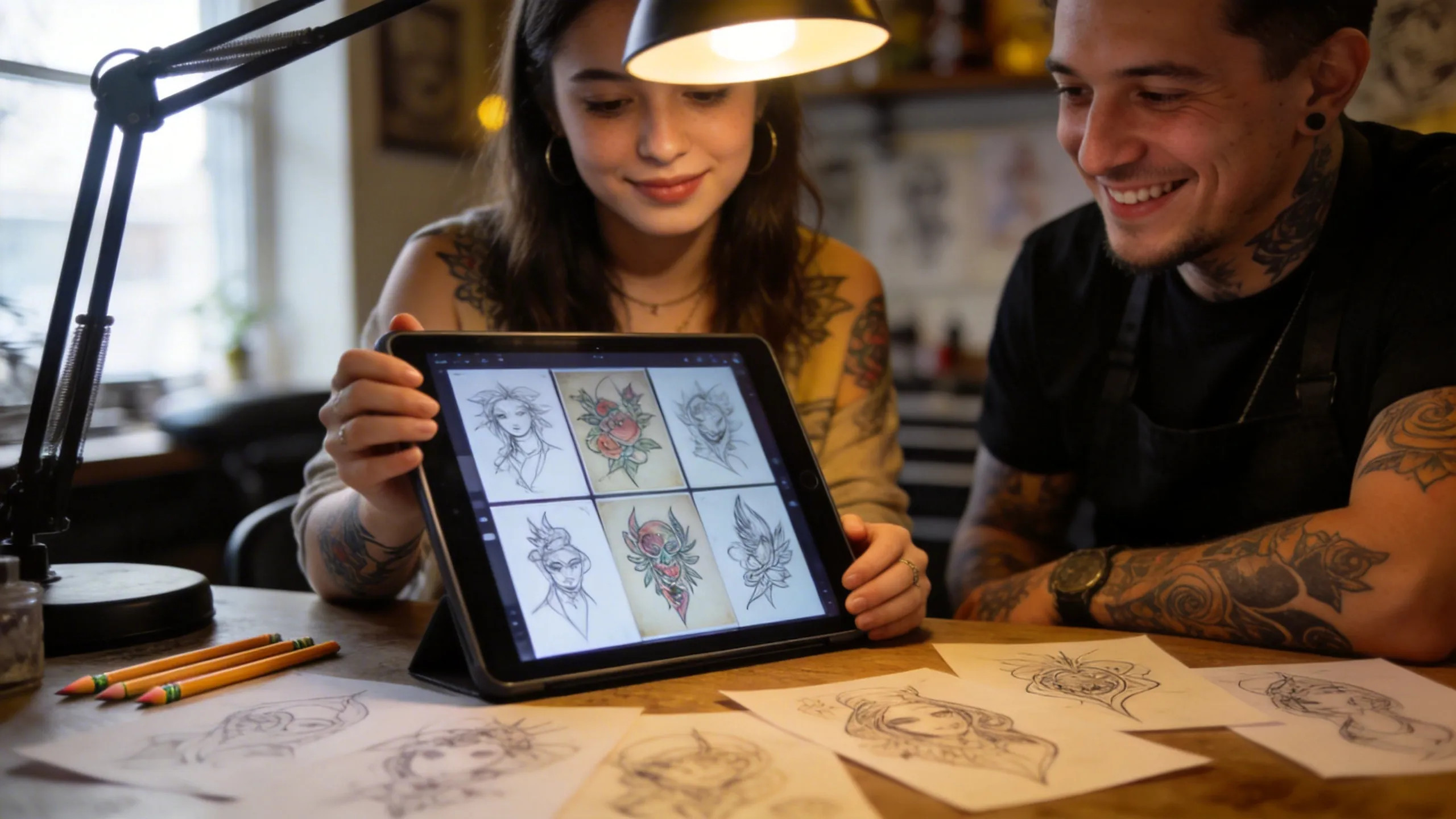
Before deciding on a tattoo, most people go through the same ritual: save hundreds of images from Instagram, Pinterest, and Google into a folder labeled something like "tattoo inspo." The collection grows, but the decision doesn't get easier. Every image is close but not quite right. You like the composition of one, the line weight of another, and the mood of a third. No single image captures what you actually want.
Then comes the real moment of friction: sitting in a studio, showing your artist a photo that belongs to someone else, and saying "something like this, but different." The artist nods. The stencil goes on. And when you look in the mirror, it feels like a version of someone else's story — not yours.
This gap between inspiration and ownership is where most tattoo regrets begin.
The Reference Photo Trap
The internet doesn't lack beautiful tattoo images. What it lacks is the one that belongs to you.
You find a gorgeous koi fish piece and think: if the water were a little more dynamic, and the style were closer to fine line instead of traditional, it would be perfect. But traditional search gives you no way to make that adjustment. You're stuck choosing between thousands of finished pieces that were designed for other people's bodies, stories, and skin tones.
And then there's the communication problem. Try describing "elegant but not delicate, bold but not heavy, geometric but still organic" to someone you just met. Even the most skilled artist needs more than words to land on the exact image in your head.
This is the core tension: you know what you want, but you can't show it — because it doesn't exist yet.
Turning Feelings Into Something Visible
AI tattoo design doesn't replace artists. It solves the hardest part of the process: turning an abstract feeling into something you can point at and say "this."
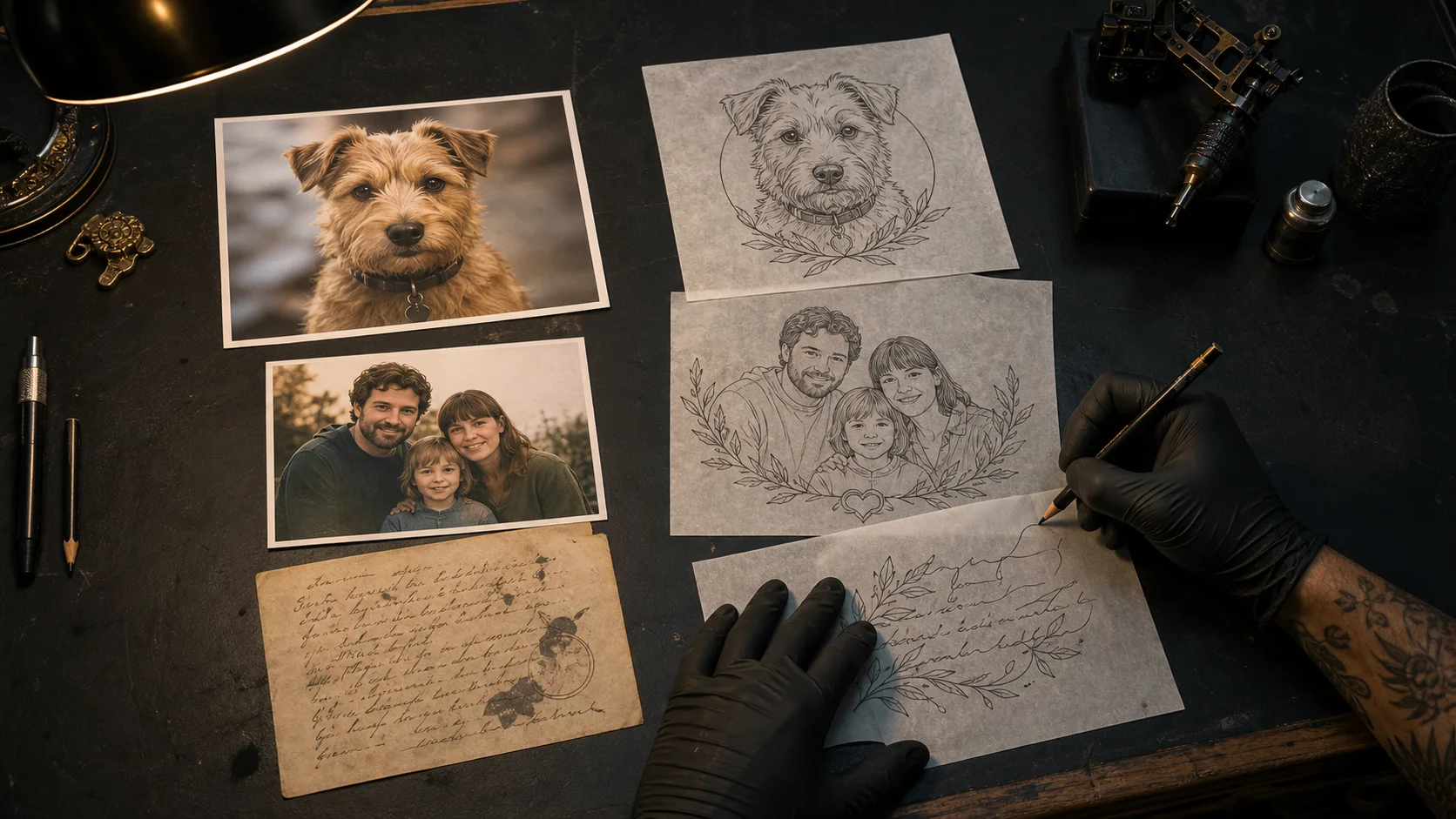
Here's what that looks like in practice. Say you're thinking about a memorial piece for your grandmother who loved peonies and grew up near the sea. You could type: "peony intertwined with ocean waves, fine line, black and grey, forearm placement." In seconds, you have a visual starting point that combines elements no Pinterest search would ever surface together.
From there, you're not done — you're just getting started. You can refine the composition, adjust the density, change the style from fine line to dotwork, or strip out the background entirely. Each iteration brings you closer to the image that was in your head but never existed anywhere else.
The output isn't a final tattoo. It's the conversation starter that makes the rest of the process — from consultation to stencil to needle — dramatically smoother.
Three Things This Changes
You stop compromising. Instead of picking the least wrong reference photo, you build exactly what you want from scratch. Your birth flower, a constellation that means something to you, a line from a poem — these personal fragments can become a single cohesive design that no one else will ever have.
Your artist understands you faster. Walking into a studio with a high-fidelity AI draft is different from walking in with a mood board. The draft shows style, density, scale, and composition — all the things that are hardest to communicate in words. Your artist can focus on refining the design instead of guessing what you mean.
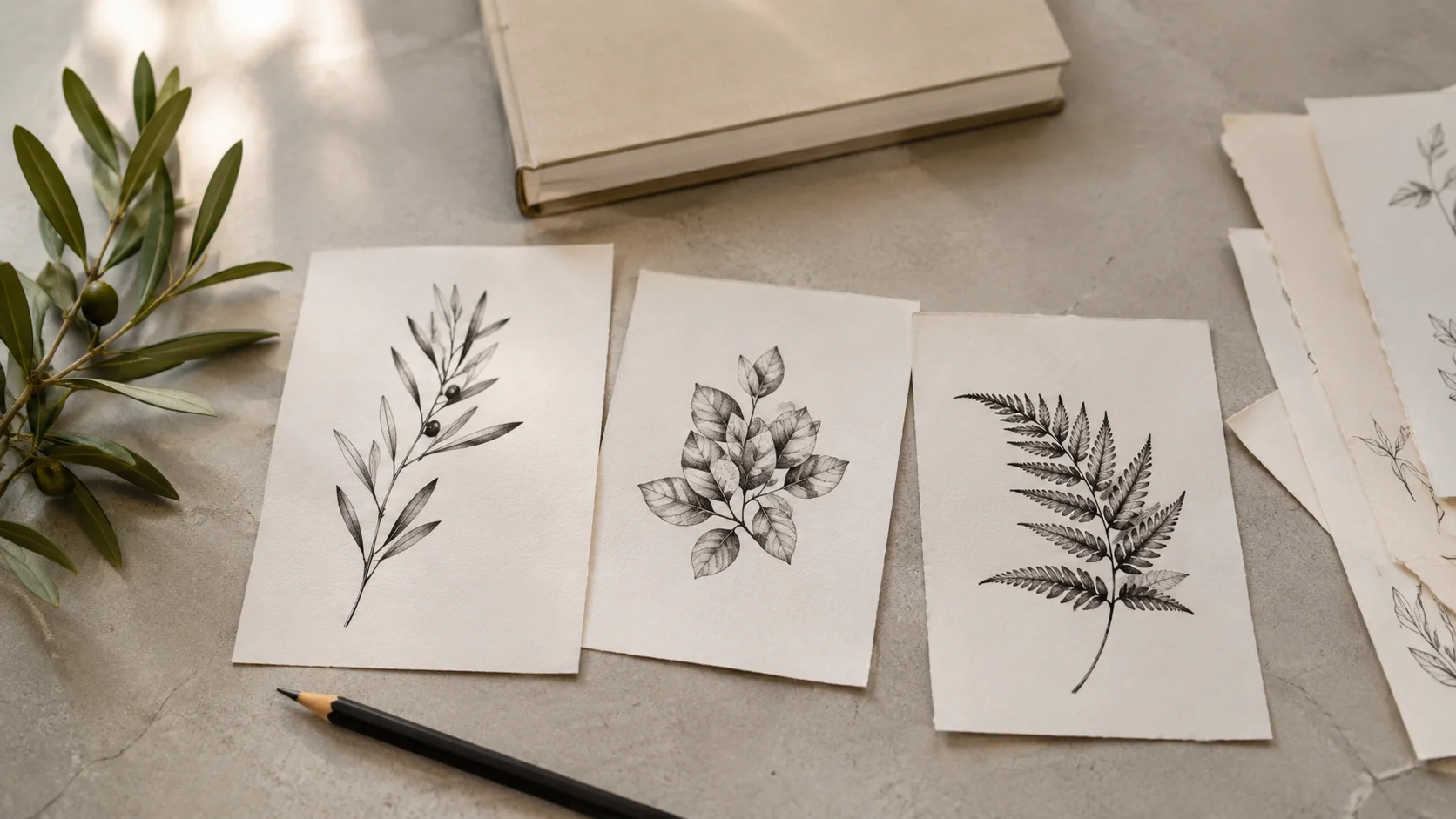
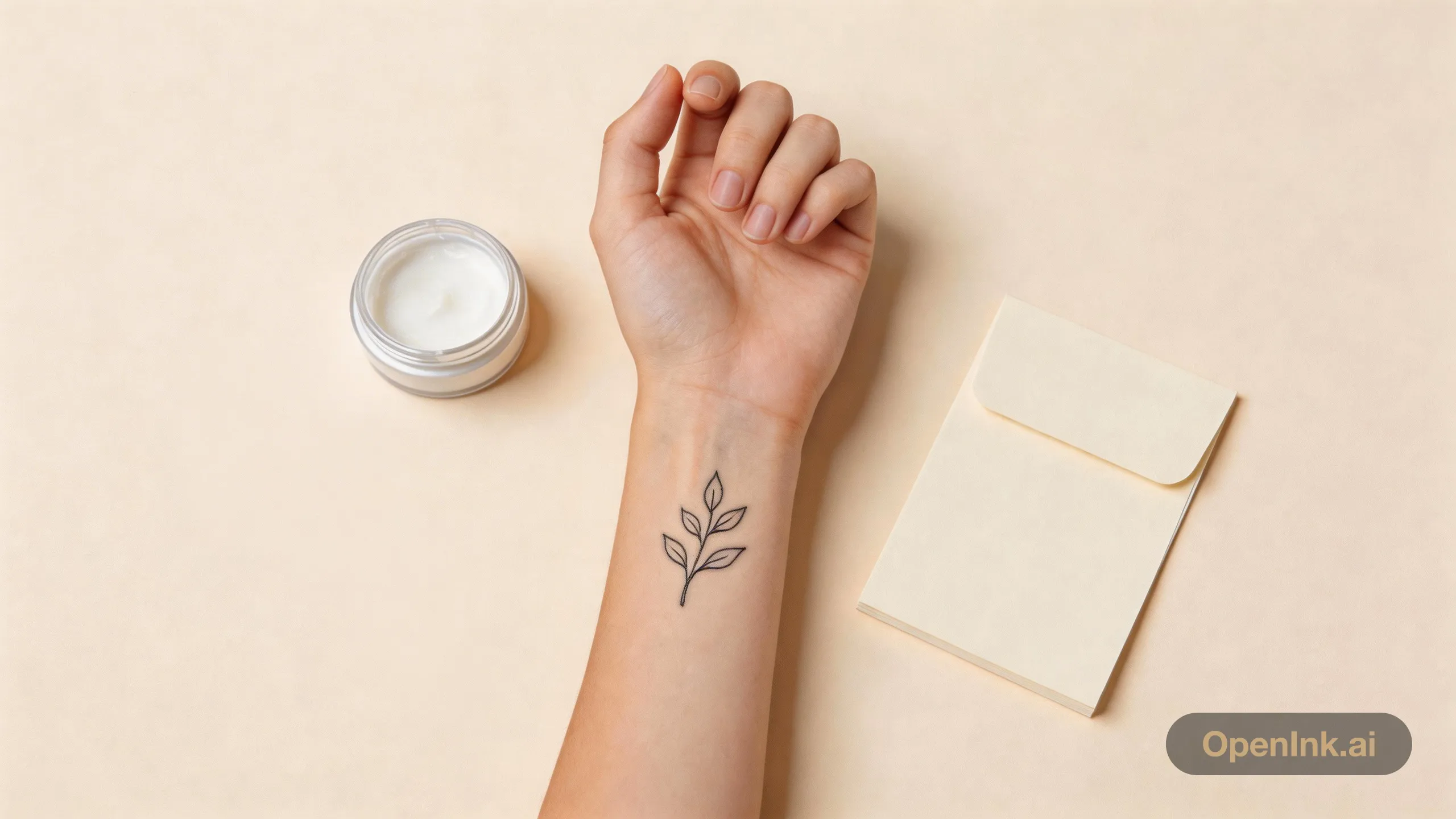
You see before you commit. Tattoos are permanent, but the decision doesn't have to be a leap of faith. Generating multiple variations lets you compare styles, test placements, and catch things you wouldn't have noticed until the stencil was already on your skin. One person might discover they prefer botanical illustration over watercolor. Another might realize the design they loved at full size doesn't work scaled down to a wrist.
It Doesn't Have to Be Complex
You don't need to be an artist or a prompt engineer. A handful of scattered keywords — "astronaut, loneliness, Monet palette, fine line" — is enough for AI to transform that vague emotional texture into a clear visual.
Some people start with a dream fragment. Others start with a song lyric, a place they visited, or a feeling they can't name. The point isn't to produce a masterpiece on the first try. The point is to make the invisible visible, so you have something real to react to, adjust, and build on.
That sketch can become a tattoo sticker, a starting point for deep collaboration with your artist, or simply the moment you realize what you've been looking for all along.
If you want cleaner drafts before you start iterating, use our ChatGPT Images 2.0 tattoo prompt guide to write prompts that include placement, line weight, negative space, and stencil needs from the start.
Ready to Start
Stop settling for reference photos that are close enough. You've spent hours scrolling because the right image doesn't exist yet — so create it.
At the OpenInk AI Design Studio, type in the idea that won't leave your head. From minimalist lettering to dense realism, the tool meets you where you are and helps pull the design out of the abstract.
Turn this guide into a tattoo draft
Keep the motif from this article, then test style, placement, and line weight before you talk with an artist.